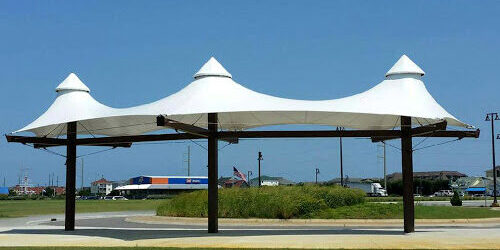
How Tensile Fabric Structures Are Shaping the Future of Architecture
March 05, 2026 By admin
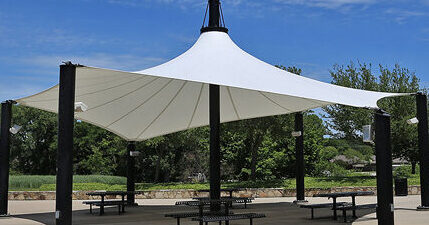
How Tensile Fabric Structures Are Shaping the Future of Architecture
The architecture world is rapidly changing, and modern architecture materials and architectural designs are breaking limits and proving what can be achieved. One of the developments that has seen the light in this group is tensile fabric architecture, which is an ideal fusion of aesthetics, functionality, and sustainability. These structures are changing modern architectural designs with a variety of structures ranging from tensile car parking structures to big-span canopies.
What are Tensile Fabric Structures?
A tensile structure is a lightweight system of construction applying tensioned fabric membranes in supports that could be cables, frames, or pylons. Such buildings are so flexible, long-lasting, and cover large spaces, using little material.
Key Features:
- Strong yet lightweight
- High-tensile fabrics, such as PTFE, PVC, and ETFE, provide durability.
- Waterproofs and customization of shape and form—organic shapes and curves are possible.
- Weatherproofed: UV protection, waterproofing, windproof.
- Energy efficient: The use of natural lighting has reduced the use of artificial lights.
Tensile Fabric Structure Applications
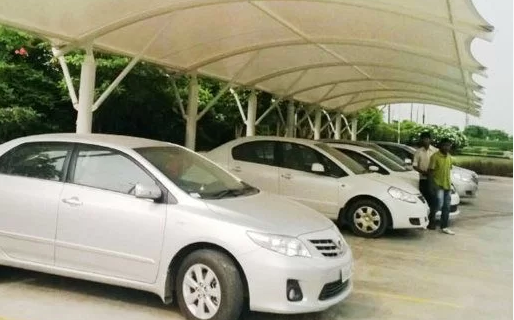
- Car Parking Solutions: Tensile fabrics are used in car parking systems, one of the most popular purposes of uses of such structures. The structures offer protection to vehicles and shade them in addition to making parking lots more attractive. Benefits include:
- It is cheaper in construction than the usual concrete parking buildings.
- Easy to install and low demands on a foundation.
- They look good aesthetically and are ever sleek and modern.
- Stadiums/Event Spaces: Tensile roofs have become a commonplace structure in stadiums, amphitheaters, and exhibition halls owing to the fact that they cover big spans without creating a hindering column.
- Canopies and Walkways of Airports: Tensile membranes are also used and applied to the drop-off area and walkways of the airport because they protect against weather conditions, and at the same time, they should produce the effect of openness and airiness.
- Eco-Friendly Buildings: Sustainability is achieved by the tensile structures, as the amount of waste materials left over and energy used is minimized, thus making it a perfectly green architecture.
Why Tensile Structures Are the Future of Architecture
- Innovative Aesthetics—it will be possible to design futuristic and fluid.
- Cost & Time Efficiency—Reduction in the material cost and construction speed.
- Sustainability: Energy-efficient/recyclable materials.
- Multipurpose—It can be used in commercial, dainty, and industrial settings.
Conclusion
With the need to find sustainable, aesthetically pleasing, and functionally effective know-how, architects and designers are turning to tensile fabric structures. Though there may be a tensile car parking system or a mega stadium roof, these give an indication that the future of architecture is lightweight, flexible, and innovative.