Uses of Tensile Structures Applications & Examples
March 05, 2026 By admin

What Are the Uses of Tensile Structures? Applications, Examples & Design Insights
One such architectural design is the tensile structure, which utilizes tension and not compression to hold and frame constructions. These are lightweight yet strong structures that are supported and covered with tough membranes or fabrics.
Due to the growing interest in constructing innovative, sustainable, and aesthetically attractive solutions, tensile structures are becoming increasingly popular in contemporary construction and design. They can be used in sports stadiums and in shaded walkways, just to mention a few, and they are very far-reaching.
We will discuss the purpose of the tensile structures and their functioning, and analyze some notable objects, their parts, advantages, and limitations in this article.
What is the Use of Tensile Structures?
The main usage of tensile structures is for the coverage of large spaces without heavy structural integration internally. They are great because they span long distances with reasonableness, besides keeping such a large structure together.
They are commonly used:
- Roofing Systems: Tensile roof/roofing systems are highly employed in stadiums, exhibition halls, and pavilions due to their flexibility and aesthetic appeal.
- Sports Facilities: Indoor and outdoor arenas enjoy the clear span and durability.
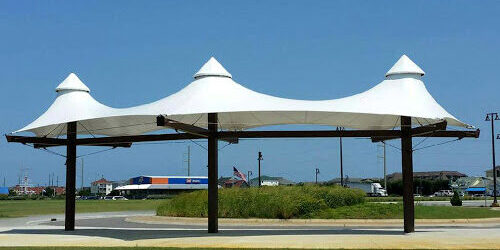
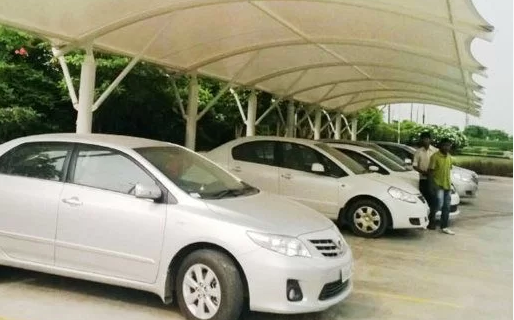
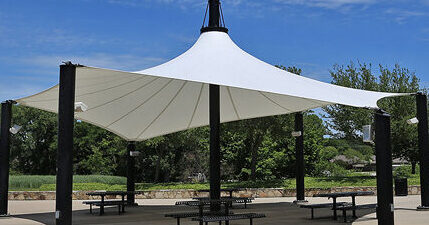
- Shelters and Shade Structures: Car parking shades, bus shelters, and outdoor sitting places.
- Walkways and Corridors: Shaded walking pathways within campuses, airports, and resorts.
What Buildings are in Tension?
The tension-based architecture is contrasted to the traditional constructions based on compression (such as bricks and concrete). In tension structures, the component faces are pulled apart instead of being pushed together.
Some forms of tension-based structures are
- Cable-stayed bridges
- Suspension bridges
- Tensile Membrane Roofs
- Tent-like structures
On the contrary, compressive structures (such as stone arches or concrete columns) depend on pressure to support shape. Tension structures would be more flexible, light in weight, and responsive.
What is one example of tensile architecture?
Munich Olympic Stadium, Germany, is one fine example of tensile architecture designed to host the Olympics of 1972 in the summer. It’s great, tent-like roof construction, which is constructed of acrylic glass and steel cables, ushered in a fresh epoch of literal and lightweight design. The UK is another good example of this, with the Eden Project based on the use of interlinked geodesic domes with ETFE membranes creating a climate-controlled environment where a wide variety of plant life is found.
What Is a Tensile Membrane Structure Example?
High-performance fabrics used to construct tensile membrane structures include PTFE-coated fiberglass or PVC-coated polyester. The famous example of this can be seen in Denver International Airport, whose series of buildings used white peaked roofs and snow-capped mountain-like tensile membrane buildings.
Other brain farts are:
Pad into the public parks with shade sails.
- Mall and campus walkway covers
- Short-term tent structures and display structures
What are the uses of tensile force?
Tensile force finds application in the course of various engineering and architectural systems where materials are stretched and not pressed.
Major applications are
- Bridges: Cable-stayed and suspension bridges have tensile devices in their cables.
- Playgrounds and Parks: Seating or shade coverings that are fabric-covered.
- Tents and Temporary Structures: These are very dependent on the use of tension in cloth and ropes.
- Airplane Hangars: Apply large footbridge spans.
- Greenhouses: Tensile fabrics are transparent; therefore, light and climatic control are possible.
What are the 3 components of a tensile structure?
Any tensile structure needs three main components to operate:
Fabric Membrane
The key substance that offers protection and form for gearheads is meant to be manufactured of PVC, PTFE, or ETFE.
Support System
The membrane is held up by poles, masts, or arches and supported with strings that carry the loads.
Tensioning Mechanism
Application and tension cables, anchorage systems, and turnbuckles.
What is the advantage of tensile fabric?
There are many benefits of tensile fabric, which features the potential of the material in contemporary structures:
- Lightweight and flexible: It can cover huge spaces with minimal supply.
- Cost-effective: Saves material and installation costs.
- Good Aesthetics: Free-flowing lines offer a futuristic appearance.
- UV and weather resistant: The high-quality material is resistant to harsh situations.
- Sustainable: It is usually produced using recyclable or energy-saving products.
What are the disadvantages of tensile structures?
Tensile structures offer a lot of advantages, yet there are a couple of drawbacks:
- The durability restrictions: Clothes can deteriorate with usage and need some servicing.
- Weather Bans: Unsuitable in regions of heavy snow and gales without strengthening.
- First Design Complicatedness: It needs engineering and tension calculations.
What Is a Tensile Structure Shape?
The shapes of tensile structures are normally those in which tension can be spread in a balanced way. They can be in the following common forms:
- Saddle-Shaped Hyperbolic Paraboloid
- Hook-Shaped Buildings (Conical Structures)
The Barrel Vaults and Arches. At the foot of the tower is a descending vault where the tower and the completed tower can be distinguished. At the bottom of the tower is the descending barrel vault, where the tower and the completed tower are discernible.
Not just functional—as these forms are efficient in distributing loads—these also produce an architectural drama.
Conclusion
Tensile structures offer a unique blend of flexibility, strength, and design versatility, making them an attractive solution in contemporary architecture and construction. From stadiums to shelters, their uses are wide-ranging and continually evolving with advancements in materials and engineering.
By understanding their components, benefits, limitations, and real-world applications, it’s clear that tensile structures are not just a modern trend — they represent the future of lightweight, sustainable, and expressive design.